And How it Spawned a Campfire Talk, then a Trilogy
By Campfire Park
Writing a book is hard enough ...
But not as hard as trying to co-author a trilogy.
It all started with a half-hour talk
Especially when all you set out to do was a half-hour campfire talk. The occasion: It was the run-up to the 100th birthday of America's National Parks. The venue: a remote campground in the heart of south Florida's Big Cypress Swamp. The result: About a dozen people showed up. That didn't stop up from doing the talk about a dozen times, and eventually writing a book, then a trilogy and now this website. Did I say we? Sometimes (actually most of the time) I wondered where Rudi was.
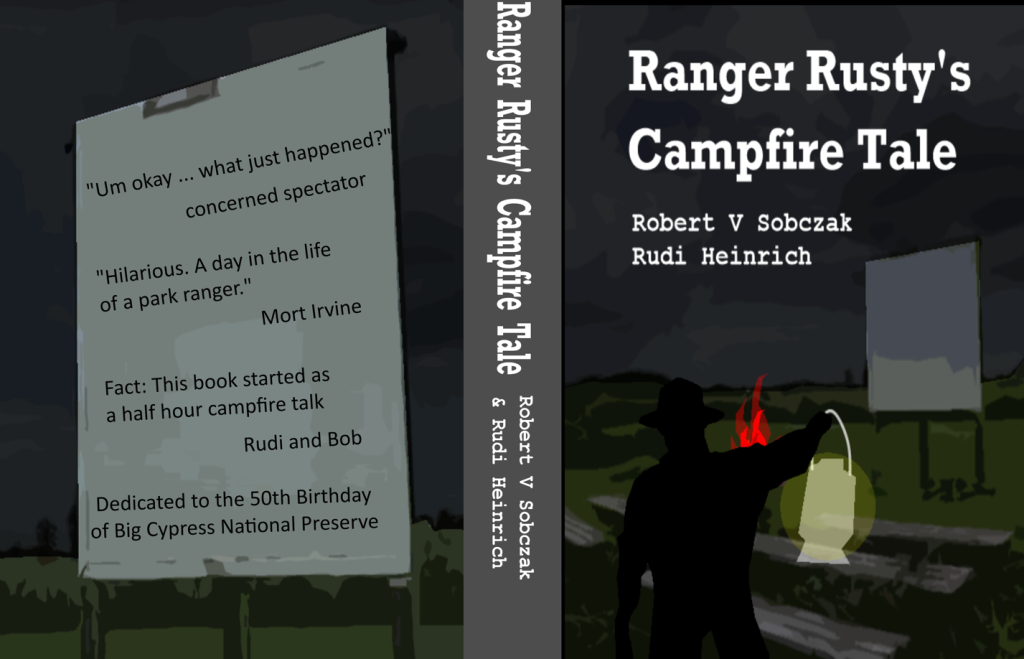
Ranger Rusty thought it was just another day of being on duty at the visitor center in the liquid heart of an ancient cypress forest. And later that night, by truck, heading to a nearby campground to give a half-hour campfire talk. Or so he thought. Or was Ranger Rusty in for the journey of his life.
Thanks for stopping by. Today, I wanted to write a short piece on the three books that I co-authored. If the books were ever featured as a movie, the Hollywood-style trailer would probably go something along the lines as written below (and shown in the video.)
So without further ado …
As Ranger Rusty raised the flag at the crack of dawn, he thought it was “just another day. Little did he know his day would turn into a 3-book odyssey. Or am I talking about myself?
Little did I know (or imagine at the time) that the endeavor of writing those three books would take six years of my life. Not that I didn’t enjoy it, and not that I did it all the time, all day long. It was usually in the evening and early morning hours – before embarking into work at the nearby National Park/Preserve – that I did most of my writing. The caveat is that I did it every day. Rarely did I let a day go by without working on some aspect of the sprawling work. The other caveat is that I had a co-author, as elaborated in the video above. But even he would say when it came to the grindstone of writing it the book was primarily me. The other caveat, and there are lots – is that the three books chime in at just under 500,000 words. That’s quite a bit by any metric. A short book, like the Great Gatsby, is around 60,000 words. Could we have used an editor to help us shorten it up? Maybe so, but I stand by every word.
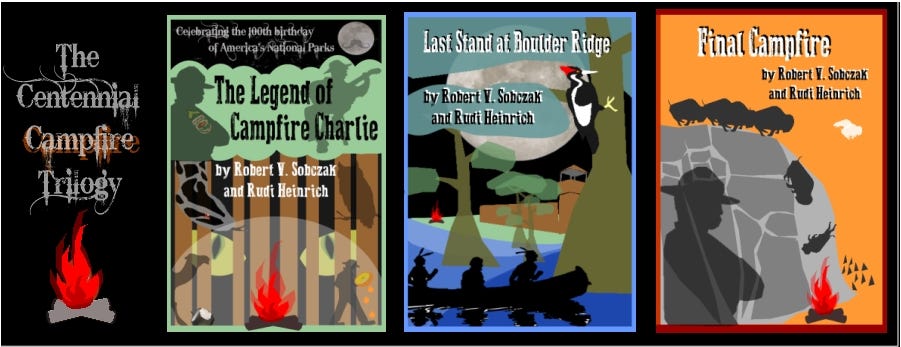
The three books
My Point:
The trilogy didn’t start as a trilogy. It started as a single book. And that single book didn’t start as a book. It started as a 30-minute campfire talk. The rest, shall we say, is campfire history. At the start of a journey usually you have no idea where it will lead. You can check out the books here: Visit the Trilogy’s website
Or, breaking news, check out the abridged version of all three here:
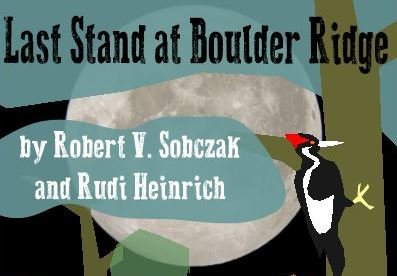
Welcome to Book 3 and what critics are raving “the stunning conclusion” to the Centennial Campfire Trilogy. At the end of the first two books of the trilogy — The Legend of Campfire Charlie and Last Stand at Boulder Ridge — our fearless protagonist, Ranger Rusty, finds himself simultaneously trying to man the Sweetwater Visitor Center in the heart of the Big Cypress Swamp while also slipping back in time to distant childhood memories of an old backcountry camp and deeper still to a first-hand historical account of adventures at a Seminole War era fort and a haunted archeological dig for dinosaur bones as he tries to conjure the energy to hold court at a campfire talk in a remote campground at the end of a very (emphasis on very) long day. As exquisite an ending you’ll ever find in a “large canvas” epic work, Final Campfire is a full-body experience that no respectable book reader, plumber or campfire enthusiast (including the inner s’mores roaster in all of us) will want to miss.
Welcome to Book 2 of the Centennial Campfire Trilogy. The saga continues! This time Ranger Rusty and his cohorts are off on a new adventure that leads them back and forth seamlessly in time and space to faraway places that include a Seminole War fort, the sands of the Middle East, the mountains of the Great Southwest, an archaeological expedition on the Mighty Joola River and airboat rides across the Everglades. Or is it all unfolding around the campfire glow in a remote nature reserve? We’ll let you be the judge.
Do you have a fear of being squeezed to death by a giant Burmese Python? Or does being followed around all day by a Florida Panther rattle your nerves? If so, join Rusty, a well meaning but – how shall we say – “often distracted” park ranger who is scheduled to give an evening talk in a swamp preserve on a topic he doesn’t much like. Not to worry (or maybe worry a lot) as the unwitting ranger meets a mysterious stranger who catapults him on a breathtaking journey to confront and maybe finally answer the deepest and most confounding question of his life. That is assuming he can ever get done (or to) his campfire talk …
The origin of this book is as improbable as it is absurd.
In December 2014 Rudi was trying to get back in the groove of civilian life after returning from a nine month tour overseas in Kuwait while Bob was on the mend from a procedure to get his heart to beat right.
But for one night everything was right, perfect in fact. Big Cypress National Preserve was celebrating its fortieth birthday at the Collier County Museum. As the festivities wound down, Bob found himself entering the ember glow and crackle of the campfire to take a brief respite when a lumbering Rudi stepped forth from the shadows.
“Can you help a fellow American down on his luck?” Rudi asked with a slightly brooding look on his face. The flicker, aroma and sound of the campfire also made him simultaneously relax as he approached.
South Florida’s winter tourist season was just about to begin. Three weeks and it would be in full swing. The kickoff for Rudi was January 9th. That’s when he was scheduled to give an evening talk around a campfire at a remote campground ― halfway the distance between Miami and Naples ― in the epicenter of the swamp preserve.
“I love the idea behind the campfire program,” Rudi lamented as he settled in around the orb of light and reached for a slider sandwich that Bob offered from his paper plate. “The problem is, nowadays, the actual campfire … munch munch … is almost an afterthought. It’s the giant outdoor screen that gets all the audience’s attention. I just sit in back … munch munch … and let the Power Point do all the work … munch munch.”
“A POWER POINT at a campfire? Apocryphal!” Bob stammered in disbelief. He flicked a pebble toward the pulsing embers. “—That doesn’t seem right.”
Rudi conceded as much as he gestured toward the campfire with a second slider sandwich he’d grabbed from the plate.
“The campfire should be ‘center stage.’ It’s how Yellowstone … munch munch … the entire National Park system … and human civilization for that matter … got its start.”
Rudi looked at the lone remaining slider. “—Are you gonna eat that?” he asked looking up.
“No, take it. It’s all yours.”
“Thanks man,” Rudi said in a brightening tone. “These sandwiches … munch munch … are really delicious. What are they?’’
“Pulled pork.”
“Oh yeah … munch munch … so, like I was sayin’ about the campfire …”
. . .
Fast forward a week later to the edge of town where Bob greeted Rudi with a proposition he couldn’t turn down. “What do you say you forget about the Power Point?” Bob suggested. “We’ll partner up to do a campfire talk ‘on the campfire,’ just you, me … and my guitar.”
“So … are you going to send me an email?”
“NO! I’m not gonna send any EMAIL … for crying out loud!” Bob gasped. “― A presentation like this, you gotta work on in-person. It’s a theatrical production.”
“You mean like Vaudeville?”
“NO! Not Vaudeville. I’m talking Off-Broadway. You gotta carefully choreograph everything in real space. It’s more than just a script.”
Rudi nodded his head as the concept slowly soaked in. A moment or two later he broke out of his reverie with an affirmative yes.
 Bob and Rudi never set out to a book, let alone a trilogy. Their task as hand was much simpler: A 30-minute campfire talk to a dozen or two campers at a remote swamp campground. |